Sheets with steps SST, history and geography
Aesthetic History Project Cover Page Ideas With a Vintage Feel
Aesthetic history project cover page ideas: tea stained paper, scrolls, monument outlines, hourglass and gold line covers, with steps, tools and time.
- 8sheets
- 4facts per card: pattern, tools, skill, time
- 23 Novlast checked

An aesthetic history project cover page should look a little old on purpose: warm brown paper, soft edges, a scroll or a monument outline, and only two or three earthy colours. The look comes from the paper and the palette more than from detailed drawing.
Four moods follow, two covers each: aged paper and scrolls, monument outlines, objects from the past, and darker gold line covers for senior classes. Every card lists the materials, the level and the time. Title and details areas stay empty so you can add them in your best handwriting.
For standard school layouts, see the history project front page designs.
All 8 sheets at a glance
| No. | Sheet | Skill | Time |
|---|---|---|---|
| 01 | Scroll title, quill corner | Easy, class 5 plus | 1 hour |
| 02 | Torn edge sheet and seal | Easy | 40 minutes |
| 03 | Domed monument skyline | Medium | 1 hour |
| 04 | Fort gate line art | Medium | 50 minutes |
| 05 | Hourglass and compass rose | Easy, class 6 plus | 45 minutes |
| 06 | Clay pot row | Easy, class 5 plus | 40 minutes |
| 07 | Gold arch frame | Medium | 45 minutes |
| 08 | Old book stack, flowers | Easy | 50 minutes |
01Aged Paper and Scroll History Front Page Design Aesthetic
Old paper is the quickest way to an aesthetic history cover. Tea stain a sheet the night before and let it dry flat under books.

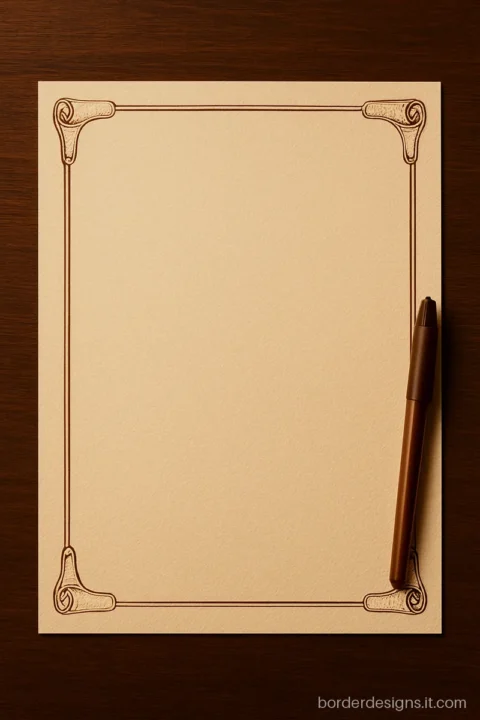
Scroll title, quill corner
Tea stained sheet, brown fineliner
- SkillEasy, class 5 plus
- Time1 hour
A tea stained sheet with a drawn scroll for the title and a quill in the corner looks like an old document. It suits any history topic from ancient to modern.
How to draw it: 4 steps
- Dab cooled tea on a 120 gsm sheet with a cotton pad and dry it flat.
- Draw the scroll 15 cm wide with rolled ends 2 cm thick.
- Use a dark brown fineliner, not black, so the page stays soft.
- Place the quill at the bottom right, angled toward the scroll.

Torn edge sheet and seal
Kraft paper, red paper, glue stick
- SkillEasy
- Time40 minutes
Torn edges and a red paper seal give a letter from history feel. It works well for topics on trade, freedom movements or old kingdoms.
How to draw it: 4 steps
- Tear the kraft sheet edges slowly along a ruler held 1 cm in.
- Glue the torn sheet onto a cream A4 sheet so a thin frame shows.
- Cut a 5 cm wavy circle from deep red paper for the seal.
- Draw a simple star or flower inside the seal, never letters.
02Monument Outline Covers for an Aesthetic History Project Cover Page
A generic monument outline tells the reader the subject straight away. Keep it simple and do not copy a real building in detail.
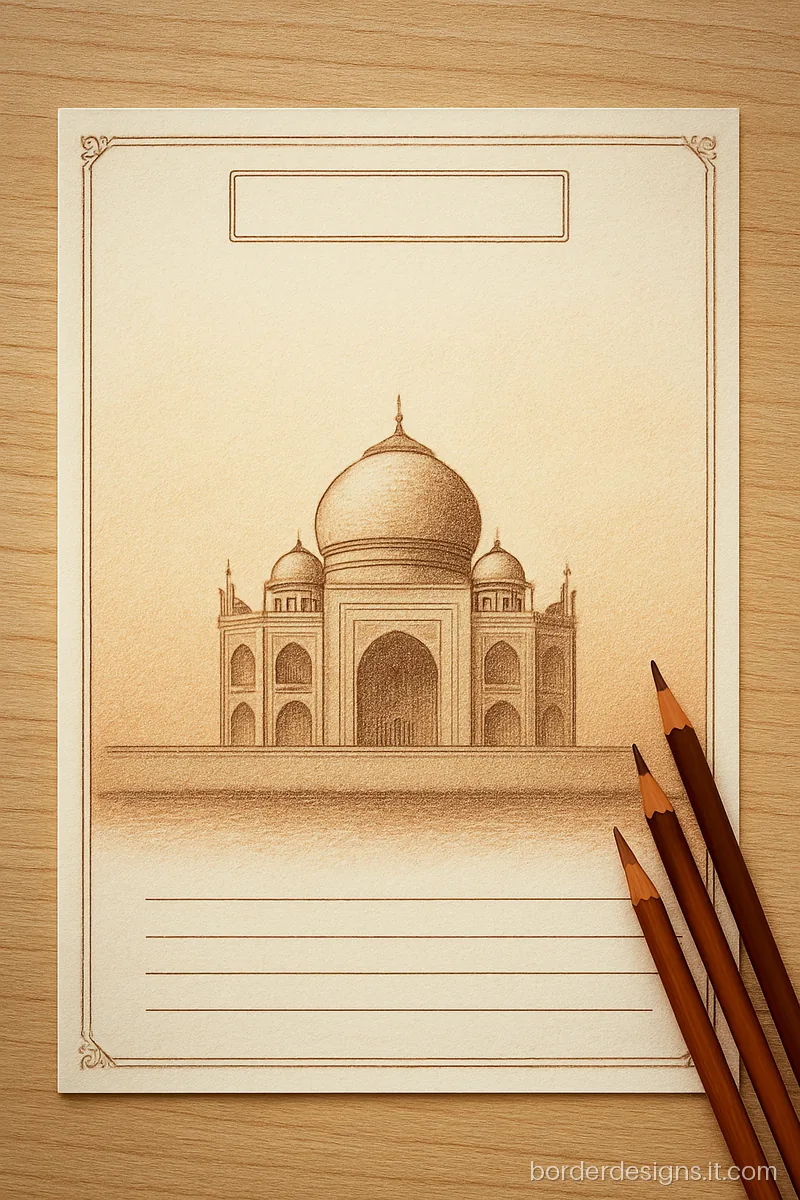
Domed monument skyline
Sepia and brown colour pencils
- SkillMedium
- Time1 hour
A domed monument with a row of arches in sepia pencil along the bottom third looks calm and old. It is ideal for medieval history and architecture projects.
How to draw it: 4 steps
- Rule a ground line 8 cm above the bottom edge first.
- Trace a bowl for the dome so its curve is even on both sides.
- Draw five arches of equal width, each about 2.5 cm.
- Shade from dark at the ground to light at the dome top.

Fort gate line art
0.3 and 0.5 mm black fineliners
- SkillMedium
- Time50 minutes
Fine black line art of a fort gate and its walls gives a clean, sketchbook look. One colour only makes it fast and very neat.
How to draw it: 4 steps
- Draw the gate as a tall pointed arch 10 cm high in the centre.
- Add wall blocks as rows of rectangles, each 1 x 0.5 cm.
- Use the 0.5 mm pen for outlines and the 0.3 mm for blocks.
- Leave the sky empty above the gate for the title.
03Objects From the Past
Objects say history without any buildings. An hourglass, a compass rose and old pottery are easy to draw and fit many topics.

Hourglass and compass rose
Olive and brown pencils, compass
- SkillEasy, class 6 plus
- Time45 minutes
An hourglass stands for time and a compass rose for travel, which fits explorers, trade routes and the passing of eras. Olive and brown keep it earthy.
How to draw it: 4 steps
- Draw the hourglass 9 cm tall with two triangles meeting at the waist.
- Use a compass for a 7 cm circle behind the compass rose.
- Give the rose eight points, long for main and short for between.
- Keep the two objects on a diagonal, top left to bottom right.

Clay pot row
Terracotta and brown sketch pens
- SkillEasy, class 5 plus
- Time40 minutes
Three clay pots with simple bands and a few broken pieces suit ancient civilisation projects. Terracotta and cream look warm and earthy.
How to draw it: 4 steps
- Draw three pots of different heights, 6 to 10 cm, along one base line.
- Add two or three bands of simple zigzag or dots round each pot.
- Scatter three small broken pieces beside the pots.
- Keep the pattern on pots geometric, not figures or symbols.
04Dark and Gold Covers for Senior Classes
For classes 10 to 12 and college, a darker cover with metallic lines looks mature. Both of these need careful, slow inking.
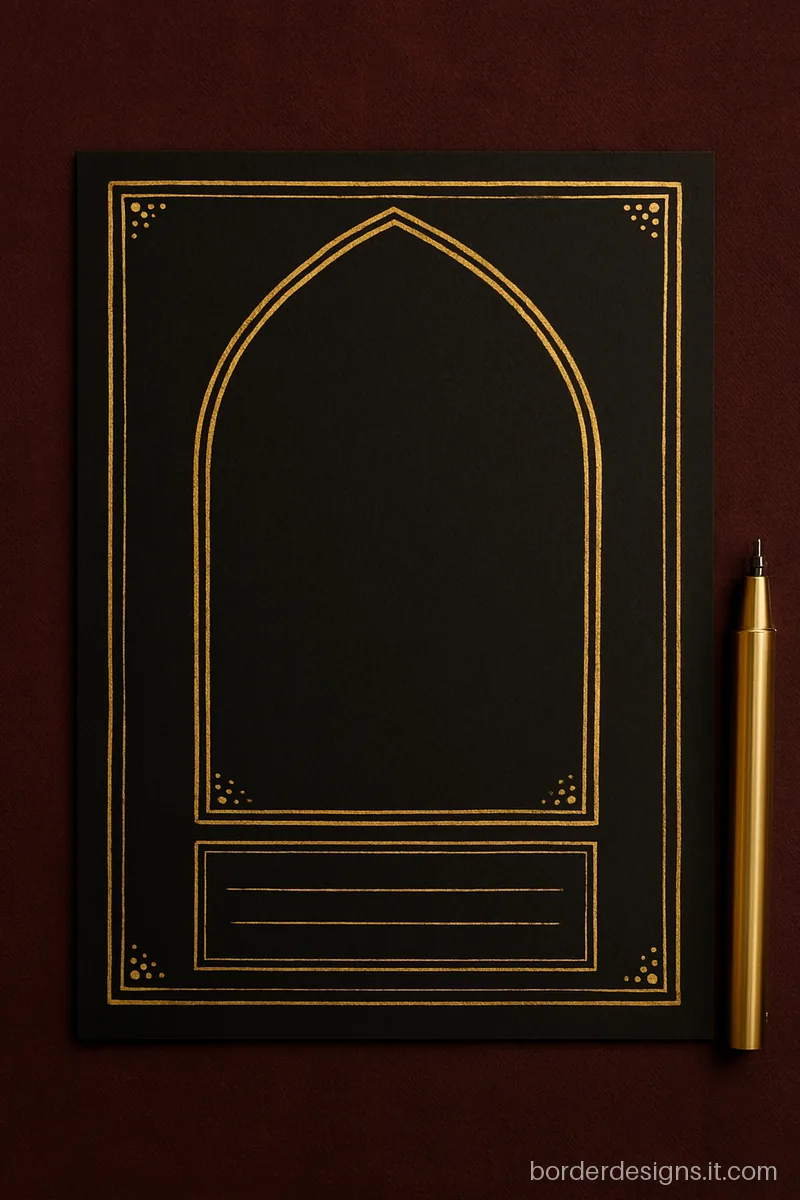
Gold arch frame
Gold paint pen, black sheet, ruler
- SkillMedium
- Time45 minutes
A tall gold arch drawn as the frame of the whole page turns the cover into a doorway to the past. Gold on black is striking from a distance.
How to draw it: 4 steps
- Draw the arch sides as straight lines 2 cm in from the edges.
- Use a string and pin from the centre to swing the pointed top evenly.
- Add a second line 5 mm inside for a double gold frame.
- Write the title in gold or white inside the arch top.
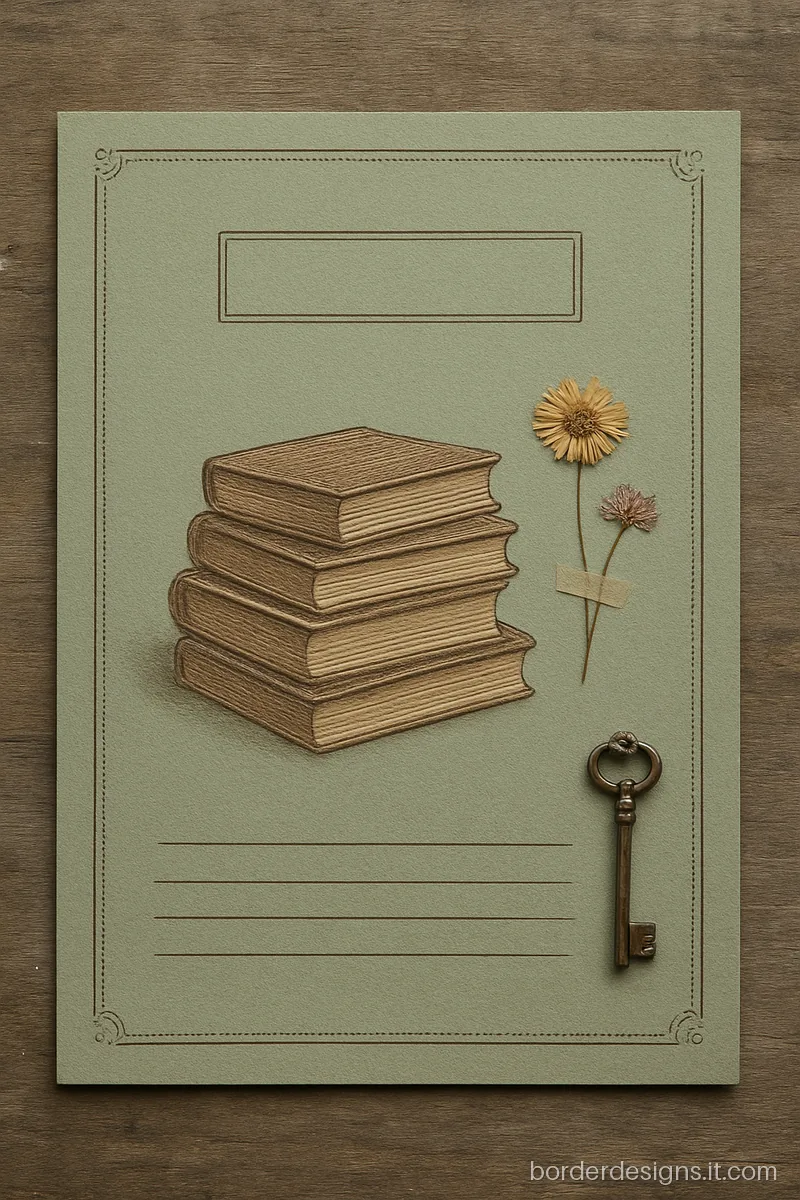
Old book stack, flowers
Sage sheet, brown pens, pressed flowers
- SkillEasy
- Time50 minutes
A stack of old books with a few pressed flowers on sage paper looks soft and bookish. It suits history of literature or culture projects.
How to draw it: 4 steps
- Draw four books stacked at slight angles, 12 cm wide at the base.
- Use brown and cream for the books so they look aged.
- Fix two pressed flowers beside the stack with thin tape strips.
- Place the title box above the stack, centred.
How to Age Paper for an Aesthetic History Cover
- Brew a dark mug of tea, then wait till it is cold; an adult should pour the boiling water.
- Lay a 120 to 200 gsm drawing sheet on newspaper. Thin printer paper tears when wet.
- Dab tea on with a cotton pad or sponge, darker at the edges and lighter in the middle.
- Sprinkle a few drops for spots, then leave it flat to dry for several hours.
- Flatten the dried sheet beneath a pile of textbooks until morning.
- Draw and write only after it is fully dry, or the ink will spread.
No time for tea? Rub the side of a brown colour pencil around the edges of a cream sheet. It gives a similar soft frame in ten minutes.
Palettes and Motifs That Read as History
| Topic | Motif | Palette |
|---|---|---|
| Ancient civilisations | Clay pots, pottery pieces | Terracotta, cream, brown |
| Medieval period | Domed monument, arches | Sepia, beige |
| Forts and kingdoms | Fort gate, walls | Black on cream |
| Explorers and trade | Compass rose, hourglass, scroll | Olive, brown |
| Modern history | Old letter with seal, books | Kraft brown, red, sage |
Never draw maps or national symbols on the cover. For geography covers with a globe, see the geography front page designs, and for social science files as a whole, the SST front page designs.
Layout and Details
Put the title in the top third, the motif in the middle or bottom, and a details box with your name, class, section, roll number, school, session and the submitted to and by lines. Rule the box lines 1 cm apart in pencil and erase after writing. For an aged sheet, write in dark brown rather than black. If you want the inside pages to match, pick a frame from the history border designs.
Questions students ask
How do I make an aesthetic history project cover page?
Start with aged or cream paper, choose one motif such as a scroll or a monument outline, and use only browns, olives or gold. Give the title room to breathe on every side.
What colours suit a history front page design aesthetic?
Earthy shades: sepia, brown, terracotta, olive and cream. For senior classes, gold on black also looks elegant.
Can I draw a real monument on my history cover?
A simple generic outline, such as a dome with arches or a fort gate, works best. It is quicker to draw and suits many topics.
Is tea staining safe for school students?
Yes, if the tea has cooled. Let an adult handle the hot water, use thick paper and dry the sheet flat before drawing.
How long does an aesthetic history cover take?
Forty minutes to an hour for drawing, plus drying time if you tea stain the paper. Stain the sheet the evening before to save time.